Let’s say I plan to setup an emergency fund for me and my wife.
If our monthly expenses are INR 75,000 then technically our emergency fund should have INR 2,25,000 – INR 4,50,000.
Now if I take our usual savings and investing rate of 15% each with an approximate salary of INR 1,20,000 then I must at any costs save at least INR 36,000 per month, taking us about 6-12 months to reach the emergency fund target.
Usually what I would look at is the amount of money in my emergency fund on a weekly or monthly basis.
However what if once I know that I need to save at least INR 36,000 towards my emergency fund every single month I stop looking at how big the fund is getting.
What if all my focus is to get that 36,000 saved. Maybe some months I try and save more than that by lowering other useless expenses.
This is me focusing on the process. As an example let’s say something happens and we need to withdraw 75k from the emergency fund.
What now? The amount of money there has gone down, so do I look at the money in the fund or do I simply tell myself that this is a minor setback and we should get back to our regular process of saving 36k.
2.2 Lakh emergency fund is an outcome based goal while saving 36k is a process based goal.
What I have 100% complete control over is actually the process, what I can do to the best of my abilities is the process. The outcome then is the side effect of the process I have been following for the past many months.
It isn’t the goal that matters. Instead it is the process that has the magic engrained in itself.
If we focus on the process, sincerely do everything that the process demands, for however long it demands then getting to the goals is nothing but the side effect of following that process.
We tend to get distracted by the fact that if we hit or miss our target.
It is not about the target.
Now this philosophy can be applied to literally everything in our lives.
Do let me know one such process goal that you have set for yourself.
Here are 2 of mine: Publish at least 2 articles every week on this blog and send a daily finance, money and career newsletter.
Nobody wants to be wealthy when they are 90 years old, have health problems and cannot really enjoy the wealth itself that they might have taken decades to build.
We all want to get rich and live a great life when we are young. We do not want to look at the price when ordering food, we might want to order from a great restaurant, sponsor drinks for our friends at the bar or maybe even randomly buy a gift for our parents or spouse.
Now that is what I call a great life. Being able to anything we want with our money and knowing that money is not something that is a problem.
All it requires is a proper and conscious plan to save and invest regularly, without involving hours of research picking stocks or watching YouTube videos trying to find that one crypto coin that will make you an overnight millionaire.
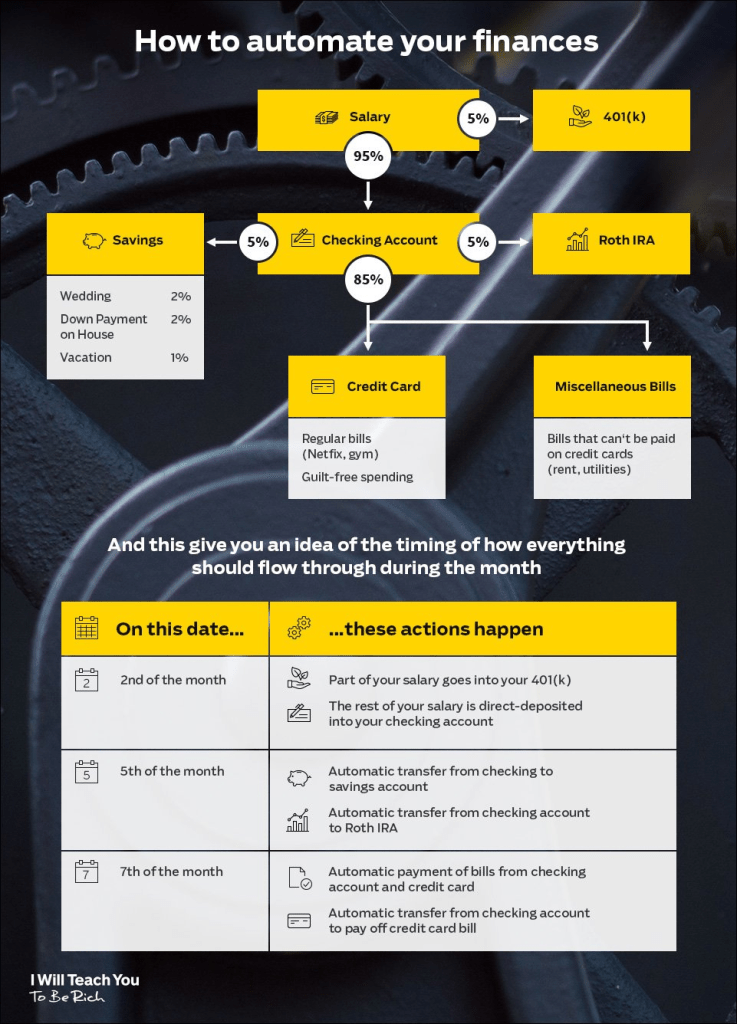
The strategy is A.S.A.I.
Pretty much like the Acai Berry but with an S.
Let’s tackle the A.S. part first – Auto Savings
Look neither you have time nor me, nor anyone else to come home from 10 hour work days and then try to find time and put in effort to make transfers for our savings, emergency funds or even investing.
We want to come home, or get done with work and then relax, live life, spend time with our friends and family.
To make that possible we need to automate stuff so that we can focus on what makes us truly happy, that is living life the way we want it.
In finance we say “Pay Yourself First”
What this means is the moment you get paid a fixed portion of your earnings should automatically go towards your savings and investments because that portion is what will make you financially wealthy.
On an average a minimum of 10% of your income every month should go into savings. You can pretty much automate this either by creating a bank transfer mandate or simply set an SIP in a liquid fund of a fixed amount.
So for example, let’s say you make INR 1,00,000 per month paid to you on the 3rd of every month and 10% of that is INR 10,000.
So an SIP of 10,000 on 3rd itself would be awesome.
What this will do is take that money out of the picture, so in essence you only see INR 90k per month.
Now let’s move to the A.I. part, the AUTO INVEST.
It is great to invest at least 20% of your monthly income, once again automagically!
You want to keep things simple, so instead of wasting hours on picking stocks just go for an index fund, and invest into the top 50, 100 or 250 stocks through an ETF or an Index fund and go about living your life and spending time with your family.
I love this auto approach because it accomplishes multiple tasks for us. It not only allows us to build our savings and investment corpus automatically but also takes away some of our income without us even getting to see it.
That pushes us to focus on improving our income, because all our brain sees is INR 70k per month.
This would allow you to not only build a corpus that can potentially make you financially wealthy a couple decades before your retirement age but also motivate you to build proper skills, motivate you to do better at your job or business and earn more.
A perfect system if you ask me.
Here is something I really liked, this structure comes from the one and only Ramit Sethi.
These kinds of automatic systems to invest are the systems that actually create long lasting wealth for the 99.9% of us. Rest 0.01% of the people end up becoming Warren Buffett. And I for sure am not coming close to the kind of wealth he has generated. Save automatically, Invest automatically, be rich early.
Earlier this year I picked up this book I have had for about a year now. The title, Man’s Search For Meaning, written by Viktor E Frankl. I had no idea about what is in this book.
I was having a low time in my life and maybe thought that this book might give me some motivation or a nudge towards the right direction. 2020 has been a weird year for me. I was looking for some guidance somewhere, anywhere I could find it.
To my surprise the book was about what real suffering is, and it put everything in it’s rightful place for me. This small book changed who I am.
Let’s get to what Frankl had to say about concentration camps and finding meaning in one’s life.
Frankl saw three possible source for meaning: in work(doing something significant), in love(caring for another person, as Frankl held on to the image of his wife through the darkest days in Auschwitz), and in courage in difficult times.
This sentence alone helped figure out quite a bit about life, career choices and choices in general. Work is what takes the most amount of time in our lives.
And through our work we are able to recognize ourselves, figure out who we really are. So being able to choose what we work upon, how we work upon those things is definitely a big plus.
Love is something that motivates and pushes us. I would say that it is also what is responsible for the courage in difficult times.
People who matter to us the most can push us through hard times even if they are not with us.
Like a drowning man clutching saw a straw, my inborn optimism(which has often controlled my feelings even in the most desperate situations) clung to his thought: These prisoners look quite well, they seem to be in good spirits and even laugh. Who knows? I might manage to share their favorable position.
So, Frankl talks about his optimism right as he is about the enter the camp for the first time. Even though in his heart he know what happens to people at these camps, there is a spark of optimism inside him. And sometimes this spark of optimism is what can keep us going through everything that is troubling us.
This inborn optimism as Frankl points out is what can be that one straw, the only straw you need to save yourself from drowning.
In psychiatry there is a certain condition known as “delusion of reprieve”. The condemned man, immediately before his execution, gets the illusion that he might be reprieved at the very last minute.
We, too, clung to shreds of hope and believed to the last moment that it would not be so bad.
There might be a delusion of reprieve thing going on in our minds, but at least it helps us go through the really bad stuff sometimes.
Fifteen hundred captives were cooped up in a shed built to accommodate probably two hundred at the most. We were cold and hungry and there was not enough room for everyone to squat on the bare ground, let alone to lie down. Once five-ounce piece of bread was our only food in four days.
The conditions that these guys had to live in, just reading those made me a better human being. We sometimes forget to appreciate the small things, the tiny pieces of goodness around us. This put it all into perspective for me.
So, this is when the lockdown had started around April 2020, I was feeling weird that I cannot order a pizza, or get a McDonalds burger.
Upon reading that these guys had a loaf of bread as food for 4 days and they had to do tons of manual labor just put me in a space where a pizza would have been nice but I will not allow “no pizza” to ruin my mood or how I am feeling about life.
My family was safe and healthy, my wife, and me were safe and healthy and that is all that was important.
Suffering is relative. We believe we have it worse off than someone else until we get to really hear what they are going through. And sometimes our suffering just becomes irrelevant in the grand scheme of things.
Once again just getting to know someone else’s story is enough to make us feel the importance of everything we have instead of crying over spilt milk.
The significance of the finger game was explained to us in the evening. It was the first selection, the first verdict made on our existence or non-existence. For the great majority of our transport, about 90%, it meant death.
Their sentence was carried out within the next few hours.
Those who were sent to the left were marched from the station straight to the crematorium.
“Was he sent to the left side?”
“Yes,” I replied.
“Then you can see him there,” I was told.
“Where?”
A hand pointed to the chimney a few hundred yards off, which was sending a column of flame up into the grey sky of Poland. It dissolved into a sinister cloud of smoke.
“That’s where your friend is, floating up to the Heaven,” was the answer.
Notice the bodies piled up in the truck….
This one was a heavy one.
I have thought about this sentence and tried to think about how they might have felt about the fact that a simple finger pointing to left or right can be the difference in them living or being burnt alive.
No matter how hard I try I cannot un hear or un imagine what went through my mind when I first read this paragraph.
I am making sure to include it here just so that we know that sometimes finding meaning means just being happy at the smallest of wins and not let the biggest of losses weigh us down.
Sometimes the other men invented amusing dreams about the future, such as forecasting that during a future dinner they might forget themselves when the soup was served and beg the hostess to ladle it “from the bottom”.
Our soul finds a way to live, we learn to let things and events pass as time passes. We realize that the only thing that will stay is how we react towards things that happened in the past.
Human imagination and our abilities to think of an optimistic future is sometimes all that can keep us going through the really bad ones.
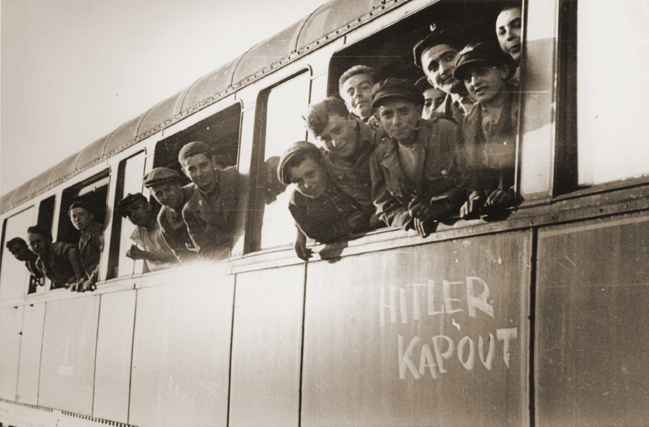
The train says Hitler is finished.
I learnt a very important lesson from this “from the bottom” joke. Sometimes a small chuckle is enough to pull us out of a pattern of self inflicted or even externally inflicted misery.
One literally became a number: dead or alive – that was unimportant; the life of a “number” was completely irrelevant. What stood behind that number and that life mattered even less: the fate, the history, the name of the man.
For instance, I heard one prisoner talk to another about a Capo, saying, “Imagine!” I knew that man when he was only the president of a large bank. Isn’t it fortunate that he has risen so far in the world?”
The experiences of camp life show that man does have a choice of action. There were enough examples, often of a heroic nature, which proved that apathy could be overcome, irritability suppressed. Man can preserve a vestige of spiritual freedom, of independence of mind, even in such terrible conditions of psychic and physical stress.
‘I will throw you into prison.’ ‘Correction – it is my body you will throw there.’ ― Epictetus
No matter what we go through in life. Remember we always will have a control over our minds.
And it is our mind that can get us to come out of the most ridiculous of a pickle.
We who lived in concentration camps can remember the men who walked through the huts comforting others, giving away their last piece of bread. They may have been few in number but they offer sufficient proof that everything can be taken from a man but one thing: the last of human freedoms – to choose one’s attitude in any given set of circumstances , to choose one’s own way.
Be good to yourself, be good to humanity, don’t take everything too seriously, live for the good times and push through the bad times.
Do not think that what is hard for you to master is humanly impossible; and if it is humanly possible, consider it to be within your reach.
Marcus Aurelius
The word “Career” is defined as an occupation taken up for a significant portion of someone’s life.
Yet the ironic situation is that our schools, colleges and our society promote instant gratification.
These institutions promote learning inside a classroom for a few years more than learning in the field.
A 3 month certificate course to become a successful superstar of your industry, a 5 hour business seminar to get you the life of your dreams by building the business of your dreams, now at a discounted price of $300 only, oh and by the way, only for today I will throw in a bonus module on getting your relationships soar high above the sky. All you will need to do is just this one thing for 2 minutes a week to get your relationships to the next level!
Even more so ironic about this whole deal is me writing this article. Marketers like me are the people responsible for this mess and instant gratification crap.
Human beings used to have a life expectancy of about 30-40 years in the 18th century. Now, that would have been the kind of life in which I would want to have something super fast. That would have been the time where I would not have wanted to put one third of my life into something that might not work.
Even during those times we had people like Mozart who went through their standard of at least 7 years of apprenticeship.
Now, I guess early homo sapiens probably got eaten by an animal within the first 10-20 years of their life. One day you might be out for a hunt, looking for food and you became dinner for a lion. Those guys had a right to ask for everything right NOW.
They really did not have much time.
In the 21st century, human beings live to an average age of 80+ years and have careers spanning multiple decades. We even have people who do one thing for 10 or so years then move to another then another.
I’m sure you’ve heard of this guy who made a payment portal, an electric car, planning to get you settled on another planet. Yes yes, you don’t like his tweets, who cares. He still manages to wait patiently for things to play out. He puts in years of time and effort into something that he knows might not get done during his lifetime. Yet Elon Musk keeps on pushing for the vision he has in his mind.
We have the time to patiently learn & gather the required skill set, apply it, make mistakes and start over again.
Patrick Bet David, the owner and founder of PHP agency, or as you might know him, the host of the YouTube channel “Valuetainment” swears by the fact that real leaders of the industry are the people who stay in the same industry for 15-20 years.
He has worked on his YouTube channel for 8 years and garnered an audience of over 2M people and 220M+ views. The key thing is he has a team, and has spent 8 years on this platform.
We are not even halfway through this article, and I can see that fear has started to creep in.
“There is a saying: ‘four years for perfecting the dough, four years for rolling and another two years for cutting’. But cutting should not be underestimated, I have been making soba every day for the past 33 years and I am still scared of cutting.”
Yoshinori Shibazaki
Personally I don’t really like that 10,000 hour rule because we start using it as an excuse. But even that rule states that to be world class in your field you have to practice your craft for at least 10,000 hours.
Let’s calculate:
So if you worked for 8 hours straight every single day, with no bathroom or food breaks and no weekends and no holidays, you would touch the 10,000 hour mark in about 3.5 years. And here we are, 20 something olds changing our jobs every 2 years because we feel that 2 years is enough to learn everything about a role, or make the most amount of change in a company and it’s customers.
I have seen a lot of people throw this 10,000 hour figure into the conversation just to make their point about either being very good at their craft, or being miserable at it. You require patience, hard work and a will to go through the dips that are going to come along as you progress to the higher echelons of work culture.
People my age are changing their jobs every 2 or so years.
I think I have learnt enough from this role or I think this job isn’t going to provide me much more knowledge
I don’t feel I am getting paid enough for the work I have been doing for the last gosh! 1 and a half years!
Even I have dreams to fulfill, I don’t think I am going to be able to fulfill my dreams by working for someone else, I will open up my own business
Now, there might be some truth to the third point there but I don’t think many people realize how hard, long and arduous of a process it is to sustain a business.
In this day and age of internet and low barriers to entry, people forget that they need to still earn the trust of real human beings who now more than ever are trying to shut themselves off from all the advertising that is thrown at their face from the minute they wake up.
Just when you’re on the verge of a breakthrough in your job, your career, your art, your writing, your singing, your guitar playing…you quit.
It’s not your fault. You were given complex tasks, goals that weren’t clearly defined and you were expected to figure it out all on your own. The result is nothing happened, you felt unmotivated to work or to even think problems through. A classic situation where Hock Principle comes into play.
The simpler and clearer the goal, the more intelligent your behavior. Complex targets on the other hand result in stupid behavior.
You are expected to fit like a cog in a machine that is the company you work for.
You were conditioned to wait for orders, then follow them with all your might throughout your school and college life. So it is no surprise to me that you feel suffocated after doing it in the real world for a couple of years.
In the real world, as opposed to the schools the pressure is too high, we’ve got bills to pay, food to buy, a house to run.
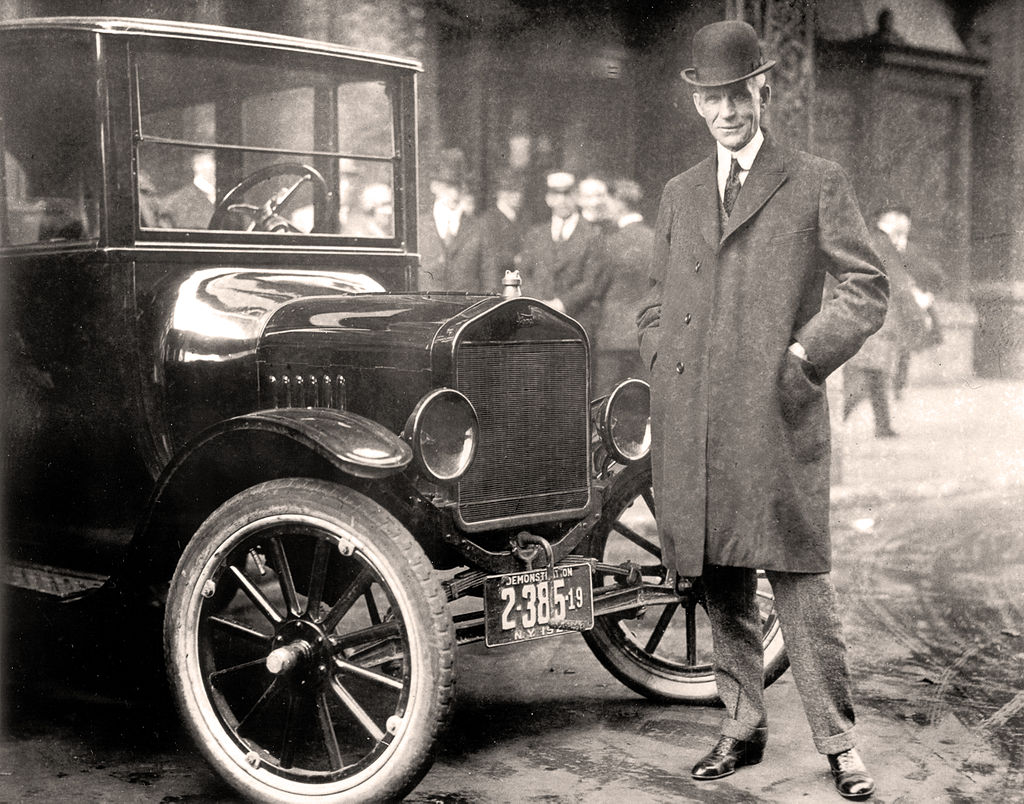
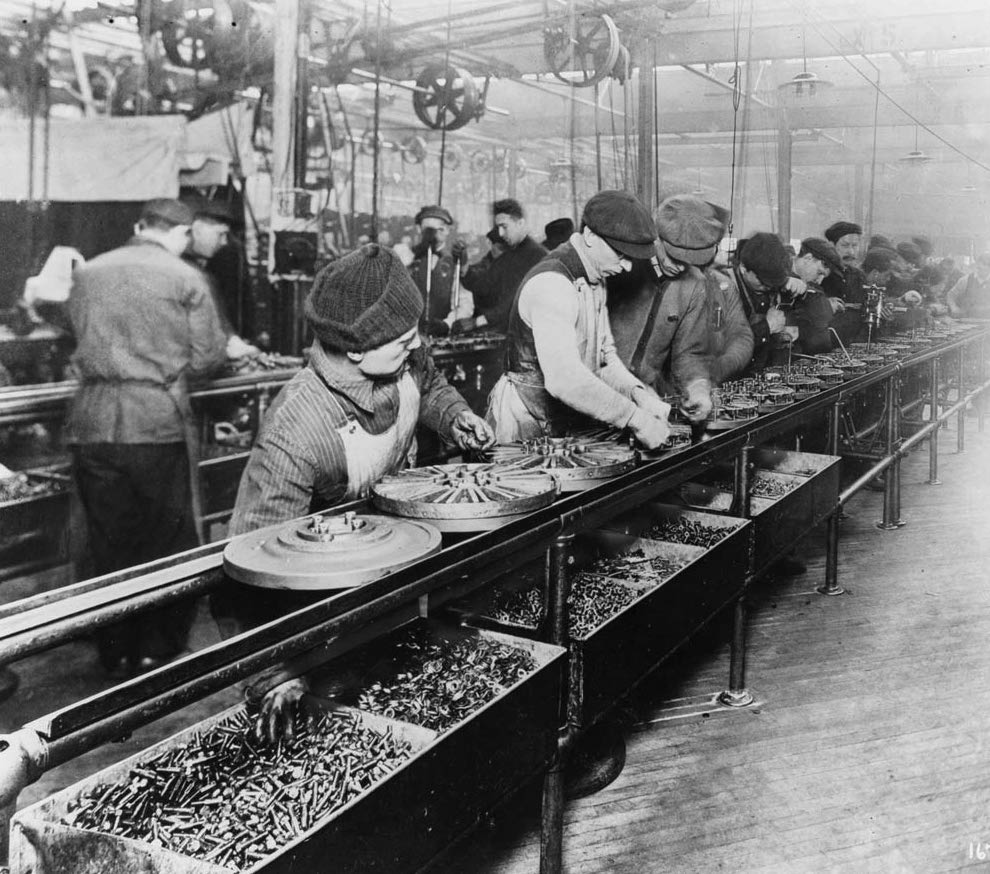
When Henry Ford popularized the mass production of automobiles, people saw what working in a factory really meant. He raised the minimum wage to $5 creating a tidal wave by setting a new high for the whole industry.
He still needed cogs who would fit into the machinery that his company was.
The whole industrial revolution was built on the idea of getting as many cogs(workers) available working on the assembly line in turn boosting the production. The high level decisions and inventions and design revolutions came from one or two people at the top of a company.
You could make out who these people were by the way they dressed in their three piece suits, with slick hair and large hats on their heads.
They always had slick and shiny shoes, with an overcoat as opposed to the factory workers who mostly dressed in a shirt and a waistcoat with a newsboy cap on their heads. The real change makers walked with poise, with their chest out, back in a reverse bow and could be seen in the company of similar men.
However, the situation is different now. Most of the change in a corporation now comes from collaboration of various minds at the lower level, for which the credit is taken by the higher managements.
This constant pressure of coming up with new ideas, then credit being taken away adds up over time. Human beings love to create but they also love recognition for their work whenever they can get some.
Absence of the chance to produce meaningful work with responsibility creates unnecessary pressure. These pressures add up to one day blow up your proverbial pressure cooker, and you end up feeling unsatisfied, wanting to start something of your own.
There are hardships in starting and running corporations, but it is in 2020 that a 10 person team can manage a $500M company with thousands of customers. Small teams help generate ideas that are closer to the core and keep people creatively involved.
Even large corporations such as Amazon, Asian Paints, Google are moving towards empowering individuals within the organization to bring about real change.
Change can also be brought about in a large corporation if you stick with it, improve upon your skill set, keep proving yourself constantly. You might need to learn about office politics, because of the sheer size of the company and the race to the top. But it is worth it, especially if you are learning more about your craft and producing better work.
We are not going to talk about quitting and starting your own thing in this article though. We are going to have a conversation about building a career over years of work and improving upon your craft.
Career I will re-stress, is something that is built over a lifetime. True skills are built by nurturing your art over years by hard work done with a strategy behind it.
If you want to stay the course, trust the process, do what needs to be done, then you’re allowed to read on.
If not, I would like you to just go back to whatever it is that you were doing before you stumbled across this essay of mine. And anyways, it’s going to be a huge blow to your ego if you read further too.
I am going to share a few questions that you can answer for yourselves. These questions are going to help you come to intelligent and thought after conclusions that are going to get you thinking in the right direction.
Remember to take your time with these. Even if it takes you a whole week. What is a week in the grand scheme of decades of building a career?
Question 1: What do you hate doing the most? If you have 2-3 items, note them down.
I want you to think deeply and answer these questions. Imagine if I pay you $1 Million to do these things for 15 hours a day.
Would you still be doing these things 2 years from now?
Would you trade those hours to do these things instead of spending them with your wife, your husband or your kids and parents?
Question 2: What kind of impact would you like to make in the world?
This question might come off as cheesy but it is imperative to understand what makes you tick so you know what general direction your career should be headed towards.
For example, If I want to help 100,000 young people figure out how they can build their careers, careers that they are happy with, I have no use taking a corporate marketing job. Optimally I should look towards education, teaching, making videos or writing articles so I can reach the numbers I hope to reach and then interact with them personally with their queries.
Question 3: What are the 3 different professions you have always wanted to take up & haven’t been able to?
We will build our way into at least one of these by the end of this article series on career and success.
Make sure to answer these questions with some thought but no restraints as no one else but you is going to see your answers.
Once you’re done with the 3 questions above, I want you to start thinking.
Thinking, not doing is the way to progress. Let the answers and the comparison with your current state marinate in your mind for a week or two.
A lot of stuff will be made clear to you in due time. A lot more, you are going to figure out by yourself after letting these ideas and answers sit in your head for a few days.
He knew his end was near, he wanted to share everything he had learnt through countless duels, battles with enemies and with himself throughout his life.
This was around the year 1643. There was a cave in the mountains north of Kumamoto, Japan. It was the perfect spot for this 60 year old man to retire into.
He was getting frail, his hair unkempt as usual. His receding hairline had retired to almost the back of his head.
Although old and frail, his mind was sharp as ever. He had chosen this cave to be the spot to transfer everything he had learnt about life throughout his travels across Japan, lessons he had learnt from his enemies and the battles he had fought. This would be his philosophy on life and martial arts compiled into text.
This text he named Go Rin No Sho.
Miyamoto Musashi is arguably the best swordsman our world has ever seen. He was born in 1584 in Miyamoto village in Japan.
He is known for his Book Of Five Rings where he highlights his philosophy of living a worthy life.
Although he garnered a reputation for not obeying a few rules such as not dressing the Samurai way, keeping his hair unkempt, he also had a reputation for using unusual weapons in duels.
One of his most famous battles was when he defeated a master with just a piece of wood derived from a boat oar, with one blow. He is also claimed to have defeated 60 opponents in 1 on 1 combat.
I believe his unusual choice of weapons, unkempt hair and body were simply means to throw off opponents. He was a master in the art of deception.
He would do exactly the opposite of what his opponents might have expected him to do. He arrived late to the duels when expected to be on time.
Once upon a time, his opponent set a trap with his partners to lure him into a 1 on 1 duel, while arriving with a platoon of people. As Musashi had a reputation of arriving late, they could easily ambush him.
Well, on that day he arrived early, earlier than the opponents and with one fell swoop beheaded their leader. This caught everyone off-guard, where he was able to then win over all those people.
Miyamoto Musashi, followed Bushido. Bushido is the way of the Samurai.
This code was practiced by all Samurais in all of Japan. And the basic premise of this code was honesty.
Honesty does not just mean being honest with other people, it also means being honest with yourself. Being honest about your shortcomings and your strengths in order to build a better you. Musashi in his book of five rings constantly talks about the importance of improving yourself from all fronts and how your death is dishonorable if you haven’t given something all you had.
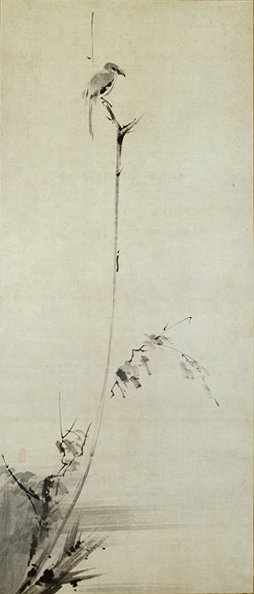
Miyamoto Musashi promoted people to take up arts such as calligraphy that teach precision, patience and attention to detail as a means of winning in life. He was a master artist along with other things as well.
Art By Miyamoto Musashi
This is a truth: when you sacrifice your life, you must make fullest use of your weaponry. It is false not to do so, and to die with a weapon yet undrawn.
Miyamoto Musashi
Life can be easy at times, and at times it can be hard. We all have our fights, small or big.
We do not want to look back at our lives when we are 75 and say I wish I would have tried that thing I always wanted. Never leave your weapon undrawn.
It will seem difficult at first, but everything is difficult at first.
Miyamoto Musashi
And we must fight our fights. To do that however, we must train ourselves to be stronger, wiser and better human beings. With time and delibrate training things start to become easier and easier as they get ingrained into our minds and bodies.
The letter below depicts one of the stories where Miyamoto’s way of thinking shows us that almost all hurdles in life can be crossed with adequate training of he mind and the body.
Dear Mookung, How are you?
I have been staying at Yagyu’s house. He is a really kind friend, so I am doing very well. However, a month ago, while I was learning swordsmanship from Yagyu, I met another friend, who is named Miyamoto Musashi. Before I met him, Yagyu told me that Miyamoto Musashi was the strongest Samurai in Japan. I asked him, “Is he stronger than you?”
He answered, “I did not compete with him, but I talked with him about swordsmanship many times. At that time, I always thought he was stronger than me.” I was surprised at his answer because Yagyu had very great swordsmanship. I met Miyamoto Musashi at his home.
Yagyu and I went to his home together, and I had an opportunity to learn swordsmanship from him, so many people envied me. Before teaching us swordsmanship, he showed us his swordsmanship. He said this style of swordsmanship was ‘Niten ichi ryu’. While learning swordsmanship, I asked how to have great swordsmanship to him. He pointed to a straw mat and said, “Can you walk on edge of the mat?” I walked on the edge of the mat as he said.
He asked again, “If the width of a bridge whose height is six feet is as narrow as the edge of the mat, can you walk on it?” Actually, the width of the mat was approximately three inches, so I thought it might be very dangerous to walk on the narrow bridge.
I answered, “Hmmmm… I am not sure…” He asked, “If the width is three inches, can you walk on it?” I said, “Of course, I can walk on it.” “How about this? What if the bridge links a mountaintop and the other mountaintop? Can you walk on it?” I answered with a serious look, “It is impossible. It is too dangerous to walk on it. I will never walk on it.”
Miyamoto Musashi laughed and concluded this argument. “The width of the bridge is same, so if you walk on the six-feet-height bridge, you can walk on the 3000-feet-height bridge. However, because we have distracting thoughts like fear of danger, people cannot walk on it.
Swordsmanship is the same as this. Thus, training in swordsmanship means throwing away the distracting thought.” I am impressed by his explanation. Before I met him, I just thought Samurais were only strong but not smart, and I saw many Samurais who swaggered because of their swordsmanship.
However, he was very different from them although he was the strongest Samurai in Japan. Thus, I believed that because of his personality, most warriors respected him. However, Musashi was also humorous, and he described swordsmanship and object greatly, so he could be much famous than other Samurais.
After that day, we became good friends. He taught me swordsmanship, and I taught him accounting. He was very interested in learning accounting and good at math. However, he was going to have a big battle with his biggest rival, Sasaki Kojiro the following month.
Thus, I have not seen him for a while.What do you think about stories about my friends, Musashi and Yagyu? I hope that you enjoy my stories. After introducing two more friends, I will be able to go back home. I miss you a lot. I hope to see you soon.
Best,
Dongpyo Hong
With enough deliberate practice put into something, we can master that art. Training of mind, training of body are the most important things.




 Atlas of Thought