It’s okay to be indisciplined, A lesson from Viktor Frankl’s life

โ€œI am unspeakably tired, unspeakably sad, unspeakably lonelyโ€ฆIn the camp, you really believed you had reached the low point of lifeโ€Šโ€”โ€Šand then, when you came back, you were forced to see that the things had not lasted, everything that had sustained you had been destroyed, that at the time when you become human again, you could sink into an even more bottomless suffering.โ€โ€Šโ€”โ€ŠViktor Frankl

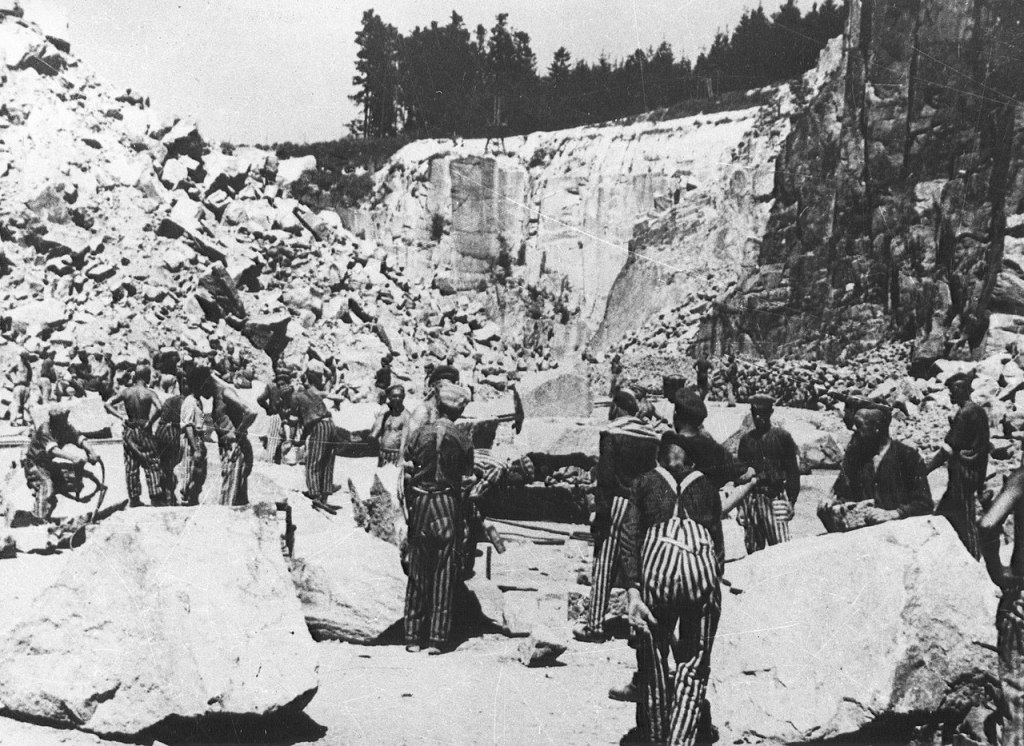
I remember reading A Manโ€™s Search for Meaning by Viktor a few years ago, and there is one story that made a huge impact on me. He talks about asking if someone saw his friend, and a person points to the smoke coming out of a chimney in the camps and says, โ€œThere is your friend, on his way to heavenโ€.

Viktor Frankl, who survived the camps, who survived atrocities that give me chills even as I am simply writing about them, felt lonely, he felt hopeless, he felt tired. Not when he was in the camps, but in fact when he got out of them.
We donโ€™t give ourselves the room to fall out of line. We tie ourselves to so many goals, so many things, and when one thing doesnโ€™t pan out the way we planned, we get completely derailed.

Cal Newport, in his book Slow Productivity, mentions that โ€œfocusing on fewer tasks and making longer-term goals allows us to give ourselves the space to fall out of line once in a while.โ€

Well, itโ€™s not just about having fewer goals. It’s about understanding that discipline and progress go hand in hand and could simply be measured in the time period of โ€œyears,โ€ not days.

On a day-to-day basis, we can let things slide as long as we donโ€™t get stuck right there. As long as we choose to get back out there and start working towards our goals.

Our beliefs make us who we are. If we think that we donโ€™t have any more room to grow, then we donโ€™t.

Here is something really interesting Ryan Holiday mentions in his book Discipline is Destiny:

โ€œIn addiction circles, they use the acronym HALTโ€Šโ€”โ€ŠHungry, Angry, Lonely, Tiredโ€Šโ€”โ€Šas a helpful warning rubric for the signs and triggers for a relapse. We have to be careful, we have to be in control or we risk losing it all.โ€

Letโ€™s just take a minute to think about all the times when things got out of hand. Were we stuck in any of these โ€œHALTโ€ stages?

I know I definitely was.

The point is, โ€œItโ€™s okay to let go sometimes. Itโ€™s okay if you have to do that involuntarily, even. Itโ€™s okay as long as you get back to it, get back to do the work that you were put in the world to do, as Marcus Aurelius would probably say.โ€

Read. Reflect. Repeat: The Career Edge of a Thoughtful Mind

Thereโ€™s a quiet weapon in the careers of people who seem to always be two steps ahead. It doesnโ€™t post about itself on LinkedIn thrice a week. It doesnโ€™t show up in KPIs. But itโ€™s there, tucked between the margins of books and the pages of old notebooks: a personal system for reading and reflection.

Warren Buffett reads six hours a day. Bill Gates famously takes reading vacations. Barack Obama kept a journal as a young man, filling it with reflections, frustrations, fragments of poetry, and political questions. These are a part of a disciplined way of thinking.

Look, we are drowning in noise. Slack pings. Industry updates. A thousand browser tabs. In that environment, reading deeply is simply an act of rebellion. More than that, itโ€™s a long-term career advantage.

Because what do careers really run on? Pattern recognition. Judgment. Strategic imagination.

And those things donโ€™t come from hustle alone. Theyโ€™re cultivated in silence. They come from sitting with Montaigneโ€™s essays or Joan Didionโ€™s clarity. From rereading a paragraph three times because it struck something. From seeing your own half-formed thoughts turn into full sentences in a journal and thinking โ€” so thatโ€™s what I really believe.

Robert Caro, the biographer behind The Power Broker, keeps a notebook titled โ€œReading Notes.โ€ He copies down passages longhand, forcing himself to slow down and absorb. โ€œYou have to see the writing,โ€ he says. Not just the facts. The shape of thought behind them.

Even Leonardo da Vinci kept detailed notebooks with sketches, inventions, shopping lists, philosophical musings and everything in between. Centuries later, we still study them. Why? Because they show the scaffolding of genius. The half-steps. The messy drafts. The questions.

We are systematizing insight. Building a palace where ideas accumulate. A system where connections spark. A rhythm that makes reflection a habit rather than a luxury.

One practical approach? A daily ritual. Ten minutes in the morning with a book that challenges you. Jot down what stood out. Once a week, scan your notes. What patterns are emerging? Whatโ€™s shifting in your thinking?

A year of this and youโ€™re not just better read. Youโ€™re sharper in meetings, clearer in writing, more persuasive in your proposals. You start seeing what others miss.

Most people skim. Most people forget. But the person who reads and reflects with intention builds an inner archive.

So read. Reflect. Repeat. Not because itโ€™s trendy. But because it sharpens the one thing your job will always demand. Your mind.

Old People Know the Secret to Happiness in Life

Across different cultures in the world there is a notion that old people tend to live slower, are usually happier and also savor the small positives in life.

Some say it is because they don’t spend a lot of time on Twitter or social media in general but in truth there is a deeper reason to this.

It turns out that old people have subconsciously trained their brains to be “happier”.

I was going through my index card notes and out popped an index card that mentions a study done by a Stanford Psychologist. (this is from the book Deep Work by Cal Newport)

Laura Carstensen conducted an fMRI study where she studied the brain response of young and old people towards positive and negative imagery.

For young people their Amygdylla fired up with positive as well as negative imagery however for old people it only fired up with the positive stuff.

This means that the brain of someone who is much older actively bypasses the negative stuff almost completely ignoring it automatically while increasing their acceptance of positive imagery!

But here is the kicker, have you heard of Neuro Plasticity? Well, it simply means that all of us can rewire our brains in specific ways no matter who we are and our age.

So we too can train ourselves to be more stoic in our daily lives with more practice.

How To Find A Mentor

I got a few DMs on Instagram as well as Twitter of people asking me to mentor them.

Here is something I can tell you about mentors and how I had cracked my chance to work with someone like Grant Cardone.

I had dived in value first. So rather than saying “hi, whatsup, would you be my mentor?”

I had simply searched the projects he was working on, did my research and found a solution to a problem he was in(he had mentioned it on his social media) and shared a solution with him.

I got no response, then next day I reiterated on the solution and sent another message via snapchat, this time he saw the message from that day as well as the day before.

He responded with something along the lines of “Would love for you to take care of it, connect with the head of staff at ___ email”

Now, I am not saying that you find a solution to my problems and email me but I am saying that no matter who the person they are going to value your input if it is worthy.

Hope you got it, let’s move ahead.

Remember, it is lonely at the top so the people there when find someone who wants to give instead of ask their eyes light up and they see a part of themselves in you.

They get thousands of emails and messages every day of people asking them for favours. Rarely someone gives first.

Will everyone reply? No, of course not, but it for sure will increase your chances of getting a reply.

So this weekend reach out to someone you follow but instead of simply asking for something start a conversation and see how you can be of value.

Directly ask what you need to ask. I have also seen people sending something like “hi, can I ask you a question?”, you just wasted an email, there is no chance they are going to reply to that.

In fact try this, if you simply ask them about one book that they have gifted the most(I learnt this from Tim Ferriss by the way), they are almost always bound to respond.

I recently did the same on my twitter and got responses from a couple of amazing people and also ended up sparking a quick twitter conversation with Nikhil Chinapa.(AMAZING)

Not only did he recommend me an awesome book but also gave me a couple of pointers about what to think while reading and oh also after reading I tweeted again tagging him to which he responded again to the lines of it’s a fun book and shared a few of his favorite parts from the book(one of them was my favorite too!)

With me till now?

Alright moving on,

When asking a question asking them which book changed their life is tricky, because they will have to spend 10 minutes and think which book changed their life.

But usually there is going to be more or less 1 book that they gifted other people the most. So ask for a book that they gifted the most.

The reason I ask amazing people for a book recommendation is because we all learn to think from other sources, usually through education and books.

If I can read the book that they have read, learn from the same source and apply I might actually be able to get one step closer to where they are.

That’s how you can look for mentors. Oh also make sure to watch what they do in their lives and not just what they say. (A video coming on this next weekend xD)

The Goal Is Not Important

Let’s say I plan to setup an emergency fund for me and my wife.

If our monthly expenses are INR 75,000 then technically our emergency fund should have INR 2,25,000 – INR 4,50,000.

Now if I take our usual savings and investing rate of 15% each with an approximate salary of INR 1,20,000 then I must at any costs save at least INR 36,000 per month, taking us about 6-12 months to reach the emergency fund target.

Usually what I would look at is the amount of money in my emergency fund on a weekly or monthly basis.

However what if once I know that I need to save at least INR 36,000 towards my emergency fund every single month I stop looking at how big the fund is getting.

What if all my focus is to get that 36,000 saved. Maybe some months I try and save more than that by lowering other useless expenses.

This is me focusing on the process. As an example let’s say something happens and we need to withdraw 75k from the emergency fund.

What now? The amount of money there has gone down, so do I look at the money in the fund or do I simply tell myself that this is a minor setback and we should get back to our regular process of saving 36k.

2.2 Lakh emergency fund is an outcome based goal while saving 36k is a process based goal.

What I have 100% complete control over is actually the process, what I can do to the best of my abilities is the process. The outcome then is the side effect of the process I have been following for the past many months.

It isn’t the goal that matters. Instead it is the process that has the magic engrained in itself.

If we focus on the process, sincerely do everything that the process demands, for however long it demands then getting to the goals is nothing but the side effect of following that process.

We tend to get distracted by the fact that if we hit or miss our target.

It is not about the target.

Now this philosophy can be applied to literally everything in our lives.

Do let me know one such process goal that you have set for yourself.

Here are 2 of mine: Publish at least 2 articles every week on this blog and send a daily finance, money and career newsletter.